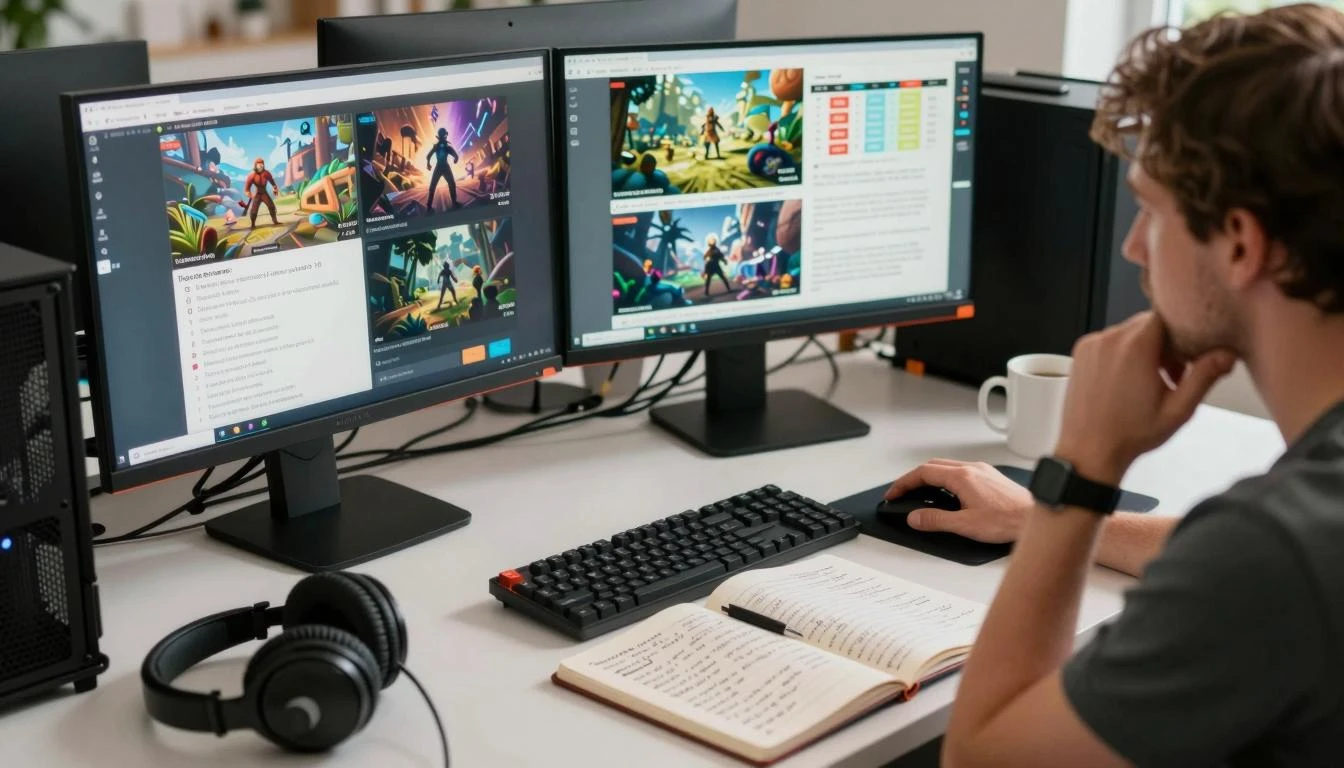
Tips Tricks To Rank Faster

The modern competitive scene is no longer about grinding endlessly and hoping the ladder eventually moves in your favor. It is about playing with intention, reading the match faster, and making small decisions that quietly create a much bigger advantage over time. That is why players who think strategically often progress faster than those who only rely on raw mechanics.
If you are looking for faster game ranking, the real answer begins with structure, not luck. The strongest players build habits that help them stay consistent, adapt under pressure, and turn each match into a lesson instead of a gamble. That shift in mindset is what separates steady climbers from players who keep resetting their progress.
Build A Strong Foundation For Ranking Up
Before any advanced strategy can work, the basics need to feel stable. A strong climb starts with habits that make your gameplay cleaner, calmer, and easier to repeat. This is where a strong rank push guide begins to matter, because the fastest progress usually comes from reducing mistakes before trying to force big plays.
Choosing the right settings
Your settings should feel natural, almost invisible. Sensitivity, keybinds, field of view, audio balance, and crosshair choice should support comfort rather than distraction. The goal is not to copy someone else’s setup. It is to create a configuration that helps you stay focused when the match becomes intense. When your settings are stable, your hands stop fighting the interface and your brain can focus on the fight itself. That simple shift can improve consistency, lower hesitation, and make every movement feel more controlled.
Understanding game mechanics
Every game hides a system underneath the action. Movement rules, recoil patterns, cooldowns, spawn logic, map flow, and economy pressure all shape how a match unfolds. Once you understand those mechanics, your decisions become sharper because you start seeing what happens before it actually happens. Legendary designer Sid Meier once said, “A game is a series of interesting decisions.” That idea matters here because ranking up is not just about winning fights.
Improving reaction speed
Reaction speed is important, but anticipation is what makes it dangerous. A player who notices patterns early often feels faster than someone who simply reacts late. Watching common entry points, listening for audio cues, and reading enemy movement can all reduce the time it takes to respond. That is especially useful in ranked play, where even a small delay in decision-making can change the outcome of a round.
Smart Strategies For Faster Progress
Once the foundation is stable, progress begins to depend more on decision quality than on flashy mechanics. This is where many players either accelerate their climb or stall completely. A practical rank push guide does not just tell you to play more. It teaches you how to play smarter in the moments that matter most.
Effective team communication
Clear communication can turn a shaky match into a controlled one. Short, useful callouts are often better than long explanations because they help the team react faster. Saying where pressure is building, when to rotate, or when to save utility gives your team structure even in chaotic situations. Good communication also keeps emotions from taking over.
Map awareness techniques
Map awareness is one of the most underrated skills in competitive play. It helps you track pressure, predict rotations, and spot danger before it reaches you. That awareness often creates the difference between rushing into a bad angle and setting up the perfect counterplay. It also strengthens your overall control of the round, which is why map awareness remains one of the most reliable tools for climbing.
Resource management tips
Resources are not only ammo or utility. They also include time, attention, positioning, health, and mental energy. The players who rank up quickly know how to spend those resources carefully instead of wasting them at the wrong moment. Do not force a fight when your team is still resetting. Do not waste a strong ability on a low-value moment. Do not give away a clean angle when patience would create a better outcome.
Common Mistakes That Slow Progress
A lot of players do not lose because they are weak. They lose because they repeat habits that quietly drain momentum. The good news is that these mistakes are fixable once they are visible. That is where a thoughtful climb starts to feel more deliberate and much less random.
Poor positioning habits
Bad positioning creates unnecessary pressure. Standing in predictable spots, overexposing in open lanes, or refusing to move after being spotted all make you easier to punish. Good positioning gives you cover, escape routes, and better trading opportunities. It also makes your team more effective because your presence becomes useful instead of fragile.
Ignoring objective play
Many players focus so heavily on eliminations that they forget what actually wins the match. Objective play controls tempo, creates pressure, and often decides the round faster than raw kill count ever will. Winning the objective usually does more for your climb than chasing highlight moments with no real payoff.
Inconsistent practice routines
Random practice creates random results. One day of aim grinding, one day of casual matches, and one day of mindless queueing will not build stable progress. Improvement needs a routine that is repeatable and focused. A simple structure works better: warm up, play with purpose, review mistakes, and then note one thing to improve next time. That kind of consistency creates momentum you can actually trust.
Improve Your Skills And Rank Up Faster
The fastest climb usually comes from a calm routine, not a desperate one. Review your recent matches and ask what really caused the loss: a bad rotation, a late decision, a positioning error, or a failure to support the objective. Once you see the pattern, improvement becomes much easier to direct. That is why small improvements often outperform long sessions of unfocused play.